How Container Transport Works in Pakistan: A Complete Guide
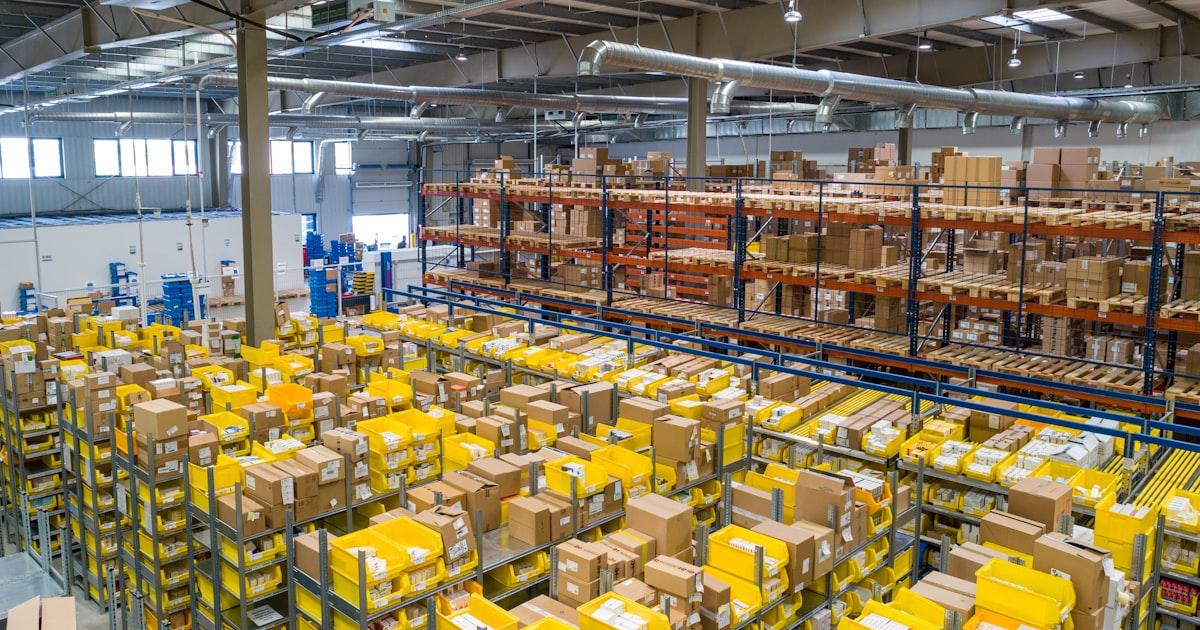
Container transport is the circulatory system of Pakistan's trade economy. Every imported machine, every bolt of textile fabric destined for export, every bag of chemical raw material moves — at some stage — inside a steel ISO container on a flatbed trailer. Pakistan's container throughput at Karachi Port alone reached 2.65 million TEUs in FY2024–25, the highest annual volume on record, across 1,943 total vessel calls. Yet for many importers and exporters, the process between "container released at port" and "container delivered to my warehouse" remains a black box of documentation, phone calls, and unexpected charges.
This guide demystifies every stage of that process — from the moment a shipping line confirms a bill of lading to the point the container is dropped at your gate.
What Is Container Transport in Pakistan?
Container transport refers to the movement of ISO shipping containers — predominantly 20ft standard, 40ft standard, and 40ft High Cube units — from port terminals to factories, warehouses, Container Freight Stations (CFSs), dry ports, or retail distribution hubs across the country.
The two major entry points are:
- Karachi Port (KPT) — Pakistan's primary container gateway, handling the majority of general cargo and containerized imports and exports through terminals KICT (Karachi International Container Terminal) and PICT (Pakistan International Container Terminal).
- Port Qasim — Located approximately 40 km east of central Karachi, Port Qasim serves as the secondary gateway with QICT (Qasim International Container Terminal) as its main container facility. It is the preferred port for automotive imports, fertilisers, bulk liquids, and industrial raw materials.
The choice of port is usually dictated by the shipping line's port of call rather than the importer's preference — a fact worth confirming at the booking stage to avoid misaligned trailer arrangements.
Stage 1: Shipping Line Documentation and Bill of Lading
The process begins before the vessel arrives. The shipping line issues an Arrival Notice — typically 3–5 days before vessel ETA — notifying the consignee or clearing agent that cargo is inbound.
The critical document at this stage is the Bill of Lading (BL). For Full Container Load (FCL) shipments, the BL is the title document for the cargo. There are two forms:
- Original BL — a negotiable instrument; must be physically presented to the shipping line (or their agent) to obtain the Delivery Order
- Telex Release / Sea Waybill — a non-negotiable form where the shipper surrenders the original at origin, allowing the consignee to collect without presenting a paper BL
The shipping line will issue a Delivery Order (DO) only after the original BL is surrendered or the telex release is confirmed, and all freight charges — including any destination charges — are paid. Failure to collect the DO before the vessel arrives at berth results in demurrage charges beginning from day one of free time.
Stage 2: Customs Clearance Through WeBOC
Pakistan's import customs clearance system is WeBOC (Web-Based One Customs), operated by the Federal Board of Revenue (FBR) under the Pakistan Customs Act, 1969. Every commercial import must be declared through this system.
A licensed Customs Clearing Agent (also called a Licensed Customs Agent or LCA) files the Goods Declaration (GD) electronically, specifying:
- The correct HS Code (Harmonized System commodity code) — incorrect classification is one of the most common causes of clearance delays and penalties
- Declared customs value under SRO 450(I)/2001 valuation rules
- Quantity, weight, and container number(s)
- Permits or NOCs from regulatory bodies where applicable (PSQCA, DRAP, Ministry of Commerce, etc.)
Risk Channel Assignment
Pakistan Customs' automated risk management system assigns each GD to a clearance channel:
| Channel | Description | Typical Timeline |
|---|---|---|
| Green | Automated release — no physical or document check | Fastest: often same day after duty payment |
| Yellow | Document examination required | Adds 1–2 working days |
| Red | Physical examination of cargo at the terminal | Adds 2–4 working days |
The government's 2025 reform proposals include AI-based importer risk profiling and round-the-clock customs assessments, targeting a reduction of average container dwell time from the current 3–6 days to under 48 hours. Pre-arrival GD filing — submitting the declaration before the vessel berths — is the single most effective measure importers can take today under the existing system.
Once the GD is assessed and duties and taxes are paid through the banking system (via customs e-payment), a gate pass is issued. No container leaves the terminal without a valid gate pass.
Stage 3: Trailer Assignment and Terminal Gate-Out
With a gate pass in hand, the transport company assigns a trailer suited to the container type. The main trailer categories in use for container transport in Pakistan are:
- Flatbed / Platform trailer — the standard option for 20ft and 40ft dry containers
- Low-bed trailer — used for heavy machinery or out-of-gauge cargo that cannot ride a standard flatbed
- Skeletal / chassis trailer — lighter, used for container-on-chassis moves at high-turnover facilities
Under the National Highways and Motorways (Dimensions and Weights of Goods Transport Vehicles) Rules, 2017, the following axle load limits apply to container vehicles:
- Single axle: 10.2 tonnes
- Tandem axle: 18 tonnes
- Tridem axle: 24 tonnes
- Maximum Gross Vehicle Weight (GVW) for a standard 6-axle articulated truck: 49 tonnes
A fully loaded 40ft container (container tare ~4,000 kg + max cargo ~26,500 kg) combined with the trailer tare of ~8,000–10,000 kg can easily exceed these limits if cargo is dense. Operators who do not respect axle load limits face challan (fines) at NHMP weigh bridges and forced off-loading — which can add days and substantial cost to a delivery. A compliant logistics company weighs the loaded unit before departure and adjusts stowage or splitting as needed.
At the port gate, the driver presents:
- Gate pass (printed or digital)
- National ID card
- Vehicle registration documents
- Driver's licence (HTV category)
After gate security checks and an exit weight bridge reading, the container departs the terminal.
Stage 4: Inland Freight Corridors
Pakistan's container freight network radiates from Karachi along five principal corridors, all converging on the Indus Highway (N-55), the Karachi–Hyderabad Motorway (M-9), and ultimately the Lahore–Karachi Motorway network (M-2, M-3, M-4).
Key Routes and Transit Times
| Route | Distance | Road Transit Time |
|---|---|---|
| Karachi to Lahore | ~1,200 km | 2–3 days |
| Karachi to Faisalabad | ~1,350 km | 3–4 days |
| Karachi to Islamabad / Rawalpindi | ~1,400 km | 3–5 days |
| Karachi to Multan | ~950 km | 2–3 days |
| Karachi to Gujranwala | ~1,250 km | 3–4 days |
| Karachi to Peshawar | ~1,700 km | 4–5 days |
| Karachi to Sialkot | ~1,300 km | 3–4 days |
| Karachi to Quetta | ~700 km | 1–2 days |
Road freight rates on the Karachi–Lahore corridor reached approximately Rs 14,000 per ton in April 2026, following a series of diesel price adjustments that drove a cumulative ~40% rate increase from 2023 levels. For total cost calculation, multiply the per-ton rate by the container's gross cargo weight (not container capacity).
NHMP enforces a 90 km/h speed limit on motorways and 65 km/h on highways for heavy transport vehicles (HTVs). Exceeding these limits attracts fines under the National Highways Safety Ordinance, 2000, and repeat violations trigger licence suspension under NHMP standing orders.
Dry Port Options
For upcountry importers, the National Logistics Corporation (NLC) and provincial authorities operate inland dry ports / Inland Container Depots (ICDs) where customs clearance can be completed without sending the full container to Karachi:
- MICT Lahore (Mughalpura Inland Container Terminal) — the largest upcountry ICD
- Quetta Dry Port
- Peshawar Dry Port
This significantly reduces the importer's free-day exposure at Karachi Port. Rather than clearing in Karachi and dispatching inland, the container is dispatched under customs seal to the dry port, and clearance is completed there under the same WeBOC system.
Stage 5: Delivery and Container Return
At the consignee's facility, the driver delivers the container and collects a Proof of Delivery (POD) — typically a signed copy of the delivery note or transport bill. The consignee unloads the container within the free time agreed with the transport company (usually same-day for most facilities).
Once emptied, the container must be returned to the shipping line's designated empty depot or container yard within the free return time specified in the shipping line's conditions. Late returns attract per diem detention charges — typically USD 20–50 per day per TEU depending on shipping line and market conditions — which are the importer's liability.
The full container lifecycle on a single import move:
- Vessel arrival → Arrival Notice
- BL surrender → Delivery Order
- GD filing → Channel assignment → Duty payment → Gate Pass
- Trailer dispatch → Gate-out
- Inland transit
- Delivery → POD collection
- Empty return to depot
Every link in this chain that is delayed pushes detention and demurrage charges onto the importer's account.
Applicable Laws and Regulations
Understanding the regulatory framework helps importers and logistics companies operate without surprises:
| Regulation | Relevance |
|---|---|
| Pakistan Customs Act, 1969 | Governs import clearance, GD filing, channel examination, penalties |
| WeBOC / FBR EDI System | Electronic platform for customs declarations |
| National Highways and Motorways (Dimensions and Weights) Rules, 2017 | Axle load limits and vehicle dimension standards |
| National Highways Safety Ordinance, 2000 | Traffic enforcement, speed limits for HTVs |
| Motor Vehicles Ordinance, 1965 | Registration, licensing, and roadworthiness requirements for goods transport vehicles |
| Karachi Port Trust Act, 1886 (as amended) | Port governance, free time, and demurrage rules |
| Port Qasim Authority Act, 1973 | Governance of Port Qasim operations |
Common Cost Components in a Container Transport Move
Beyond the freight rate, importers should budget for:
- Customs duty and taxes (varies by HS code and commodity)
- Clearing agent fee — typically Rs 15,000–40,000 per 20ft, Rs 20,000–55,000 per 40ft
- Shipping line delivery order fee — USD 50–150 depending on line
- THC (Terminal Handling Charge) at destination — already included in most FCL freight contracts but worth confirming
- Transport / haulage — from port to delivery point
- Fuel surcharge — disclosed separately by responsible operators
- Detention and demurrage — avoidable with good documentation preparation
For a full cost breakdown by route, see our container transport services page.
How to Choose a Container Transport Company in Pakistan
Not all logistics companies operate at the same level. When evaluating a partner for container transport, ask:
- Do you operate at the specific terminal my cargo is releasing from? Experience at KICT, PICT, and QICT each have different gate procedures.
- Do you own your fleet or broker capacity? Brokered capacity can cause availability gaps.
- How do you manage axle load compliance? Weight documentation must be correct before departure.
- What is your detention and demurrage track record? Avoidable D&D is a sign of poor documentation management.
- Do you provide a written freight estimate before the cargo moves? See our detailed guide on how to choose a logistics company in Karachi.
PK Transporters has operated container haulage out of Karachi Port and Port Qasim since 2011. Our coverage area spans all major cities in Punjab, KPK, Balochistan, and AJK.
FAQ: Container Transport in Pakistan
Q: How long does it take to clear a container through Karachi Port? Green Channel cargo clears in 1–2 working days after duty payment. Yellow Channel adds 1–2 days for document review. Red Channel adds 2–4 days for physical examination. Pre-arrival GD filing can compress Green Channel clearance to under 24 hours of vessel arrival in some cases.
Q: What documents does my clearing agent need from me? At minimum: commercial invoice, packing list, bill of lading, and any applicable commodity permits (PSQCA, DRAP, etc.). For restricted items, a No Objection Certificate (NOC) from the relevant ministry is required before clearance.
Q: What are free days and when do they start? Free days are the grace period — typically 5 days at Karachi Port — during which the container can remain at the terminal without demurrage charges. They begin from the day of vessel arrival (or vessel departure for exports), not from the date of customs clearance. Pre-arrival preparation is essential to use those days efficiently.
Q: Can I track my container on the road? Yes. PK Transporters provides GPS-based shipment tracking on all long-haul moves. You can also check customs status at any point through the FBR's WeBOC online portal using your GD number.
Q: What happens if my container is overweight? At NHMP weigh bridges, overloaded vehicles are either fined and allowed to continue (light overloading) or forced to off-load the excess cargo on-site for a separate vehicle (significant overloading). Either outcome causes delays and additional cost. A compliant operator weighs before departure.
Q: Is container transport via road the only option for upcountry delivery? Road is the primary mode. Pakistan Railways does offer container rail services between Karachi and Lahore via the national rail network, with Pakistan Railways Container Service (PRCS) operating on this corridor. Rail is slower in most cases but can offer cost advantages for very high-volume, non-time-sensitive cargo. The vast majority of commercial container moves use road haulage.
Q: What is the difference between FCL and LCL shipments? FCL (Full Container Load) means your cargo fills an entire container — you are the sole shipper. LCL (Less than Container Load) means your cargo shares a container with other shippers, consolidated at a CFS. FCL offers faster port release and lower risk of cargo damage. LCL is cost-effective for smaller volumes below roughly 15–20 CBM.
Written by PK Transporters Operations Team