20ft vs 40ft Container: How to Choose the Right Size for Pakistan Cargo
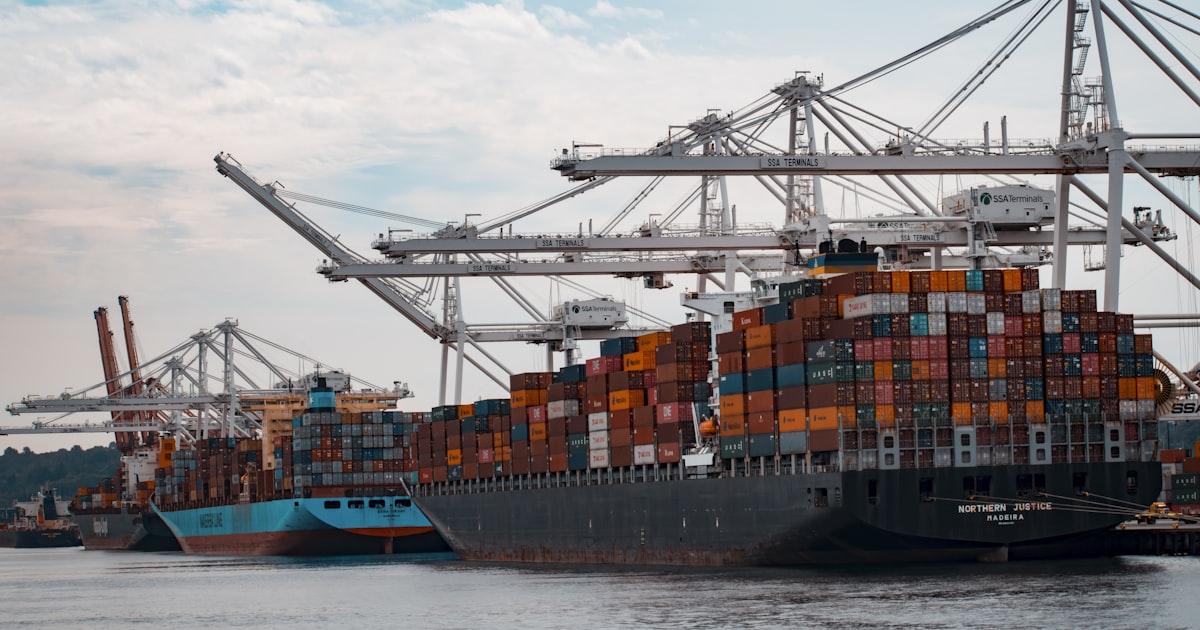
Choosing between a 20ft and 40ft container is one of the most cost-sensitive decisions in any import or export transaction. Get it right and you're moving cargo at the lowest cost per unit. Get it wrong and you're either paying for empty space or, worse, discovering mid-route that your cargo is overweight and triggering NHMP checkpost hold-ups.
Pakistan's import volumes at Karachi Port have been growing steadily — the port processed 2.65 million TEUs in FY2024–25, with both 20ft and 40ft units in circulation across every major freight corridor from Karachi to Lahore, Islamabad, Faisalabad, and beyond. Understanding which unit is right for your cargo type and volume is foundational to controlling your total landed cost.
ISO Container Types in Commercial Use in Pakistan
Four container types handle the overwhelming majority of commercial cargo at Karachi Port and Port Qasim:
| Container Type | ISO Code | Common Use |
|---|---|---|
| 20ft Standard Dry | 22G1 | Dense/heavy cargo, smaller FCL volumes |
| 40ft Standard Dry | 42G1 | General cargo, moderate volume/weight |
| 40ft High Cube Dry | 45G1 | Bulky, lightweight cargo — textiles, garments, FMCG |
| 20ft Refrigerated (Reefer) | 22R1 | Perishable cargo — food, pharma |
Flat rack, open-top, and tank containers are also available but represent a small fraction of total volume at Karachi and are typically used for out-of-gauge or liquid cargo. This guide focuses on the three dry container types most relevant to general commercial imports and exports.
Internal Dimensions: The Numbers That Matter
Many importers quote container dimensions from memory or brochures and end up miscalculating loadable CBM. The accurate internal dimensions for ISO containers in use at Pakistani terminals are:
20ft Standard Dry Container
| Dimension | Measurement |
|---|---|
| Internal Length | 5.898 m |
| Internal Width | 2.352 m |
| Internal Height | 2.393 m |
| Usable Volume | ~33.2 CBM |
| Max Cargo Weight | ~21,727 kg |
| Door Width | 2.342 m |
| Door Height | 2.280 m |
40ft Standard Dry Container
| Dimension | Measurement |
|---|---|
| Internal Length | 12.032 m |
| Internal Width | 2.352 m |
| Internal Height | 2.393 m |
| Usable Volume | ~67.7 CBM |
| Max Cargo Weight | ~26,680 kg |
| Door Width | 2.342 m |
| Door Height | 2.280 m |
40ft High Cube Dry Container
| Dimension | Measurement |
|---|---|
| Internal Length | 12.032 m |
| Internal Width | 2.352 m |
| Internal Height | 2.698 m |
| Usable Volume | ~76.4 CBM |
| Max Cargo Weight | ~26,330 kg |
| Door Width | 2.342 m |
| Door Height | 2.585 m |
The 40ft High Cube adds only 30.5 cm of internal height over the standard 40ft but that extra height translates to approximately 8.7 additional CBM of usable volume — significant for bulky, lightweight cargo. Pakistan's textile sector, which exported USD 17.887 billion in FY2024–25 (Source: Pakistan Bureau of Statistics), depends heavily on the High Cube format for bale and garment shipments.
When to Use a 20ft Container
Heavy, Dense Cargo
A 20ft container is the right choice when your cargo reaches the weight limit before filling the volume. Common examples in Pakistan's import market:
- Steel coils and flat products — steel imports through Karachi are substantial, with steel products among Pakistan's top import commodities. A 20ft container can carry ~15–20 tonnes of steel coil and reach its payload limit with significant space remaining.
- Machinery and industrial equipment — single large machines often weigh 8–15 tonnes. A 20ft container gives enough floor length for most individual units up to 5.5m.
- Bagged chemicals and raw materials — calcium carbide, soda ash, fertilisers, and similar commodities in 25–50 kg bags load weight-limited before running out of floor space.
- Auto parts and components — CKD (Completely Knocked Down) automotive kits often specify 20ft containers per model-year packing specifications.
Smaller FCL Volumes
The 20ft container is economical when cargo volume is between 12–25 CBM and the shipper wants an FCL move (rather than consolidating with other shippers in an LCL shipment). Below 12 CBM, LCL consolidation is usually cheaper. Above 25 CBM, the cost economics of a 40ft start to look more attractive.
Cost Advantage for Single-Industry Imports
For importers receiving raw materials (yarn, chemicals, dyes) in regular, predictable volumes, a 20ft FCL provides faster customs release than LCL (no waiting for the CFS to de-consolidate) while keeping costs proportionate to volume.
When to Use a 40ft Standard Container
High-Volume, Moderate-Weight Cargo
A 40ft container is optimal when your cargo fills the volume before reaching the weight limit. This describes most packaged consumer goods, many food imports, and a large proportion of FMCG cargo:
- Packaged food and FMCG — cartons of cooking oil, packaged rice, processed food typically load at 8–12 tonnes on a 40ft well below payload limit
- Furniture and home furnishings — sofas, knockdown furniture, mattresses are volume-limited and benefit from the 40ft's length
- Plastic products and packaging — PET bottles, plastic containers, and injection-moulded parts are bulky and light
When Two 20ft Containers Are Tempting
A common error is ordering two 20ft containers for a shipment that would fit in one 40ft. While a 40ft is not exactly double the volume of a 20ft (it's approximately 2x volume but with a higher weight ceiling), in most high-volume, light cargo scenarios, one 40ft is cheaper than two 20ft containers because:
- Terminal handling charges are per-container (not per-TEU) at some terminals
- The transport rate on a Karachi–Lahore 40ft move is approximately 1.5–1.7x the 20ft rate — not 2x
- Two customs GDs vs one GD means double the clearing agent fee
When to Use a 40ft High Cube Container
The High Cube format was designed specifically for cargo that is light, bulky, and needs vertical stacking room. Pakistan's export-dominant use cases:
Textile and Garment Exports
Pakistan's textile exports — the backbone of the country's export earnings — rely almost exclusively on 40ft High Cube containers. Cotton yarn bales, fabric rolls, knitwear boxes, and finished garments stack to heights of 2.5–2.6m. The standard 40ft's 2.39m internal height becomes a constraint; the High Cube's 2.70m removes it. Exporters targeting EU, UK, and US markets under Pakistan's GSP+ status (Generalised Scheme of Preferences) move virtually all garment exports in 40ft HC units.
Foam, Mattresses, and Upholstered Goods
Mattresses and foam products are extremely low-density (often less than 50 kg per CBM) but tall. A standard 40ft container wastes 30 cm of height on every layer. Over a full container load, that gap can represent 3–5 CBM of lost revenue.
Packaged Consumer Electronics
Large consumer electronics — air conditioners, refrigerators, washing machines — are tall and relatively light. The extra headroom in a High Cube allows an additional tier of cartons in some packing configurations, improving container utilisation by 8–12%.
Road Freight Rate Comparison: 20ft vs 40ft
Road freight for container transport in Pakistan is quoted per ton of cargo weight or as a flat rate per container, depending on the route and operator. As of April 2026, indicative rates on key corridors:
| Route | 20ft Flat Rate | 40ft Flat Rate | 40ft/20ft Ratio |
|---|---|---|---|
| Karachi to Lahore | Rs 110,000–130,000 | Rs 165,000–195,000 | ~1.5x |
| Karachi to Islamabad | Rs 125,000–150,000 | Rs 190,000–220,000 | ~1.5x |
| Karachi to Faisalabad | Rs 120,000–145,000 | Rs 175,000–205,000 | ~1.5x |
| Karachi to Multan | Rs 85,000–105,000 | Rs 130,000–155,000 | ~1.5x |
These are indicative rates and vary with diesel price, cargo weight, and specific delivery point. Always request a written, itemised freight estimate before committing — see our container transport services for a route-specific quote.
Cost per CBM comparison (Karachi to Lahore, mid-range rates):
- 20ft (33 CBM at Rs 120,000): Rs 3,636 per CBM
- 40ft (67 CBM at Rs 180,000): Rs 2,687 per CBM
When volume is available, the 40ft provides a ~26% lower cost per CBM — a material difference on high-volume shipments.
Axle Load Regulations and Overweight Risk
This is where container size selection has direct regulatory implications. Under the National Highways and Motorways (Dimensions and Weights of Goods Transport Vehicles) Rules, 2017, articulated trailer combinations carrying containers are subject to:
| Axle Configuration | Maximum Load |
|---|---|
| Steering axle | 7.7 tonnes |
| Single drive axle | 10.2 tonnes |
| Tandem drive axle | 18.0 tonnes |
| Trailing tandem axle | 18.0 tonnes |
| Maximum GVW (6-axle articulated) | ~49 tonnes |
A 20ft container fully loaded to its 21,727 kg payload limit on a standard 4-axle trailer (tare ~6,500 kg) gives a GVW of approximately 28,227 kg — well within legal limits.
A 40ft container loaded to its 26,680 kg payload limit on a standard 6-axle trailer (tare ~8,000 kg) gives a GVW of approximately 34,680 kg — also within limits, but with much less margin.
Problems arise when:
- Shippers load containers above the declared weight (common with bagged cargo where individual bags vary)
- Dense cargo is front-loaded in the container, creating localised axle overload
- The stowage weight is not evenly distributed across the container floor
NHMP has intensified weigh-in-motion (WIM) enforcement at major checkposts on the M-9, N-55, and M-2 corridors since 2024. Vehicles exceeding axle limits face progressive fines under the National Highways Safety Ordinance, 2000, and repeat offenders risk vehicle detention. A logistics company managing your container should weigh the loaded unit at or near the port and adjust loading before departure — not discover the problem at the first checkpost.
Practical Decision Framework: Which Container Size for Your Cargo?
Use this decision tree for common Pakistan import/export cargo types:
| Cargo Type | Weight | Volume | Recommended Container |
|---|---|---|---|
| Steel coils / rebar | 15–20 tonnes | 12–18 CBM | 20ft Standard |
| Machinery (single unit) | 8–15 tonnes | 10–20 CBM | 20ft Standard |
| Chemical bags (soda ash, etc.) | 18–22 tonnes | 18–25 CBM | 20ft Standard |
| Packaged food / FMCG | 8–12 tonnes | 40–55 CBM | 40ft Standard |
| Cotton yarn bales | 12–16 tonnes | 45–58 CBM | 40ft Standard or HC |
| Garments / knitwear | 6–10 tonnes | 55–70 CBM | 40ft High Cube |
| Mattresses / foam | 3–6 tonnes | 60–72 CBM | 40ft High Cube |
| Air conditioners / appliances | 10–14 tonnes | 50–65 CBM | 40ft High Cube |
| Auto parts (mixed) | 14–18 tonnes | 25–40 CBM | 40ft Standard |
When your cargo volume falls near the boundary of a 20ft container (25–30 CBM), request freight estimates for both options. The landed cost difference after road freight, customs duties, and handling charges often resolves the choice clearly.
Internal Linking: Related Resources
- How container transport works in Pakistan end-to-end — covers the full port-to-door process
- Karachi Port logistics guide — KICT, PICT, Port Qasim, clearance sequence
- Industries we serve — sector-specific container requirements for textiles, pharma, FMCG and more
- Coverage areas — routes and transit times for all major cities
FAQ: 20ft vs 40ft Containers in Pakistan
Q: Can I mix cargo types in one container? Yes, provided the cargo is compatible (no contamination risk), the total weight is within the container payload limit, and the packing list accurately reflects all goods. Customs examinations on mixed-commodity containers are more likely to result in Yellow Channel scrutiny if the HS code spread suggests diverse goods.
Q: Is a 40ft High Cube more expensive than a 40ft Standard on sea freight? On many shipping lanes, the sea freight rate for a 40ft HC is the same as a standard 40ft or only marginally higher (USD 0–150 more depending on the shipping line and season). On road freight within Pakistan, the trailer rate is typically identical for 40ft standard and 40ft HC.
Q: What is the maximum container weight allowed on Pakistan roads? The loaded weight of the trailer plus container plus cargo must remain within the Gross Vehicle Weight limit of the specific trailer combination — typically 49 tonnes for a 6-axle articulated truck. For a 40ft container, the practical cargo weight limit on road is approximately 26,000–27,000 kg depending on trailer tare.
Q: Can a 20ft container and a 40ft container travel on the same trailer? No. 20ft containers require a 20ft chassis or a 40ft chassis fitted with a 20ft adaptor (which reduces effective stability at motorway speeds). Most Pakistani container trailers are configured for 40ft operation; 20ft moves often use purpose-fitted 20ft trailers or twin-20ft configurations.
Q: Why do some shipping lines charge more for 40ft HC than 40ft standard? Because terminal equipment (cranes and straddle carriers) must be configured for High Cube height, and some port stacking systems limit HC containers per stack. This is less of an issue at KICT and PICT, which are well-equipped for High Cube handling, but can affect rates on certain origin ports with older equipment.
Q: What if I'm not sure whether to use 20ft or 40ft? Contact PK Transporters with your cargo details — commodity, approximate weight, and CBM — and we'll recommend the right container and provide a freight estimate for your specific route. See our container services page or reach out via WhatsApp.
Written by PK Transporters Operations Team